[caption id="attachment_7894" align="alignright" width="300" caption="Photo by Scorpions and Centaurs"][/caption]
Now that winter is almost here, the weather is less than ideal for playing with slides, sand boxes, and paddling pools, but that doesn’t mean that it’s time to put all of the garden toys for children away. There’s still a lot of fun to be had outside, it just takes a little creativity.
The changing of the seasons is a great chance for a few educational play sessions. Next time your child is playing out on a swing, have them watch the falling leaves, and perhaps catch a few to try drawing or painting with them. Do they know why the leaves are falling? Do they know what else changes in nature during the autumn?
Once it starts snowing, it’s probably time to bring in some of the summer garden toys for children, but there are lots of winter toys that they can have fun with. Now is the time to dig out the winter coat, the extra pairs of gloves, and a nice sturdy pair of boots. If the snow is deep enough, then why not have sled races? Or spend the evenings building a snowman and having snowball fights. Plastic sleds that are suitable for primary-school aged children can be obtained pretty cheaply these days, as can body-boards aimed at older children. Of course, if you decide to buy these, make sure that your kids know to avoid playing with them near main roads. It’s all too easy for car drivers to fail to see a child that is close to the ground playing on a sled, so it’s best for them to stay off the roads entirely.
[caption id="attachment_7895" align="alignleft" width="300" caption="Photo by a silly muse"][/caption]
Lighter snow can still be fun to play in. If you have some old cookie cutters, why not cut out shapes on the snow, and leave messages running along walls, or on the window sill? See how long the shapes last before they melt, or get covered by new layers of snow.
Those who live in rural areas can have hours of fun without using manufactured garden toys for children – nature offers plenty of toys! Take a water bottle, a camera, and a magnifying glass, and go looking for animals in the nearby woods. You should see plenty of tracks and trails, and, if you’re really quiet (and lucky), you might get some amazing photographs of animals in the snow.
Just remember to make sure that they wrap up well, and that they don’t go too far off the beaten path, especially in rural areas. The weather can be quite changeable, and what starts out as a pretty and gentle snowfall can quickly deteriorate into biting winds and blizzard-like conditions.
There’s so much to do outside at any time of the year, but it’s easy to forget what the world outside has to offer, especially when you have TV and Internet at home. It may take a little persuasion to get older kids to leave behind the electronics, but once you get them outside they usually have a lot of fun – even if they don’t always want to admit it!
This article was written by Crispin Jones on behalf of The Original Factory Shop. Like many kids these days, Crispin's children prefer the indoors to the outdoors; Crispin wants to change this!
Your students will love creating their own egg carton gardens. This easy and fun project is a great way to introduce the plant life cycle. After the seedlings sprout, send the sprouting gardens home or plant your own classroom garden outside!
[caption id="attachment_5297" align="alignright" width="300" caption="Egg Carton Herb Garden"]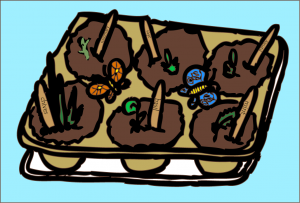 [/caption]
Types of Gardens
1. Herb Garden - basil, chives, mint, parsley, rosemary and sage.
Explain how herbs are used to season food. If possible, allow the students to smell a small sprig of each herb. Rosemary is especially fragrant. At the same time explain that students should not eat plants without checking with their parent or teacher first. If you have mint, give each student a piece of mint to taste.
2. Fruit & Vegetable Garden- carrots, celery, lettuce, tomatoes and strawberries.
Planting each one of these makes a great salad! If you plant the garden at school, students can eat the salad for a healthy snack. Watching the strawberry grow is very helpful, because the center, yellow part of the flower becomes the strawberry. Watching this flower to fruit transformation is very educational and fun for the students. The carrots grow under ground (as the roots), which is also amazing to the students as you pull it out of the ground! Don't forget to explain that tomatoes are really a fruit, not a vegetable.
Materials:
- 6 pack egg carton (12 pack cut in half)
- soil
- seeds (herbs or vegetables)
- water in a spray bottle
- plastic grocery bag
- pencil or toothpick
- small spoon
- Popsicle sticks (6 per child)
- plastic bugs or butterflies (optional)
Instructions:
- Follow the instructions on the seed packets. Do any seeds need soaking? If so, prepare the seeds ahead of time.
- Use a pencil or toothpicks to poke 5 or 6 holes at the bottom of each cell of the clean egg carton. It may be easier to hold the egg carton on the carpet and push the holes through that way.
- Detach the lid of the carton and cover it with the plastic grocery bag. Now put in underneath the egg cells. This will keep water contained.
- Using the marker, write the name of each seed on the Popsicle sticks.
- Using a small spoon, scoop the soil into the cells, filling about half way.
- Sprinkle the seeds into each cell.
- Sprinkle a small amount of soil over the seeds. Refer to the seed packet for the exact amount.
- Push the Popsicle stick in the soil next to the seeds.
- Glue bugs (butterflies) in between the cells or on the side of the egg carton. Be sure to keep the glue out of the soil. (optional)
- Use the spray bottle to water the plants.
- Place the egg carton garden near a window in the sunlight.
- Teacher assigns a student to water the plants each day, or have each student water his/her own.
- After the gardens begin to sprout send them home to plant outside or plant the sprouts in the school's garden.
[caption id="attachment_5136" align="alignleft" width="198" caption="Photo By It's Great To Be Home"][/caption]
The sun shines on more of a consistent basis, the air is warming up, rain falls so that plants can grow - it's Spring! Time to grow plants. School and Community Gardens are all the rage, but what if, like me, you have a "black" thumb instead of a "green" one? Or what if you don’t have the space or resources to plant a large garden?
Here are a few ideas, sorted from the most to least labor-intensive. All, however, would be fun!
Mounted Gutters
If you don't have a lot of ground space, go to a hardware store and buy some gutters. Have them cut to a length that works for you, then mount them upside down on the side of a building. Drill small holes along what is now the bottom so that water can drain.
The schools in my area are either cement or brick, so there’s no siding on which to hang gutters. But what about plywood? Take a couple of 4"x 8" sheets and create a simple pyramid for stability, primer and paint for a more attractive look, then attach the gutters and display them outside of the school.
This set up would be good for lettuce or spinach - they're easy to grow and tough to kill (trust me), they don't need a lot of sunlight, and you can eat them right out of the garden.
Potted Plants
The thing about growing potted plants successfully is that the pot has to be pretty big. I'm too cheap to buy large, fancy pots for my classroom, but I've found that 5-gallon buckets are pretty cheap and easy to get. Small drainage holes drilled into the bottom is probably also a good idea, along with layering potting soil with fertilizer.
I like to grow tomatoes or beans in my five gallon buckets. The beans are pretty hard to kill, but the tomatoes take more work (not much). When you plant the seeds or seedlings in the bucket, make sure you have a couple of pencils or stakes and string for the plants as they grow taller for added support. Then line them up along a walkway and make sure they get enough sun - everyone passing by will enjoy them! If space is limited, see my instructions below for growing tomatoes upside down.
Send Seedlings Home
This is a fun project with kids, done in two stages. The first stage involves bean seeds, paper towels and clear plastic cups. Each student gets a cup, with wet, wadded up paper towels and a seed. The seed goes in the middle of the wet paper towel, and students can watch as their seeds grow into little bean plants.
The second stage is to replace the paper towels with potting soil, carefully placing the seedling in the dirt during planting. If this doesn't work out too well, students can plant new seeds in the soil since they've already seen the seeds develop previously. Once the seedlings are strongly established, send the plastic cups with the seedlings home for them to plant in their own gardens!
The Sprout and Grow Window
What if these ideas are too much for you, but you still want to bring gardening into your classroom? Teaching Resource Center has the Sprout and Grow Window, which provides an underground look at plant growth without a lot of mess. The seeds and soil come with the transparent window, which stands upright on a tabletop. Use the materials provided to help each student keep a science journal, charting the growth of the plant from seed to seedling.
Upside-Down Tomatoes
Growing tomatoes upside down is a great space saver and a fun project for kids: all you need is a five gallon bucket with a hole in the bottom and some cord to hang it.
Instructions for Hanging Upside Down Tomato Plants:
- Purchase an empty five gallon bucket at any home and garden center. A green bucket will be less ugly than the orange or white ones and students can paint the bucket whatever color they like. Be sure the inside of the bucket is clean, using warm water and mild dishwashing soap and then rinsing it well.
- Next, cut a hole about two to three inches in diameter in the center of the bottom with a utility knife.
- Lay several layers of newspaper in the bottom of the bucket and cut a small slit in the newspaper through the hole in the bucket; this will help hold the seedling in place when you initially hang the bucket.
- Drill four small holes evenly around the top edge of the bucket to attach your cord. Measure the distance from the hook or other point you will hang the bucket from. Cut four lengths of cord and tie one end of each piece to each of the four holes.
- Turn the bucket on its side and carefully remove your tomato seedling from the container it came in and thread it through the slit in the newspaper so that the stem protrudes through the hole in the bucket and the roots are inside the bucket.
- Fill the bucket with the potting soil. Be sure it contains the right vitamin additives suggested for tomatoes. Be gentle to your seedling and try to allow it to protrude about three inches out of the hole in the bottom of your bucket.
- Cut several holes in the lid and place the lid on the bucket, taking care you do not harm your seedling in the process!
- Now you are ready to hang your bucket in a sunny place with plenty of room below for your tomato plant to grow down. Tomatoes need a lot of sun so do not hang it in a predominately shady spot; it should get direct sunlight at least fifty percent of the day.
- Keep your upside down tomato plant well watered and in about 50 to 75 days you should begin to see flowers and not long after you will have tomatoes. Let your tomatoes ripen on the vine and pick them as they become red and firm and ready to eat!
Hanging Tomato Plant Tips:
- Plant tomatoes such as cherry or Roma varieties that have smaller fruit, which do best with the upside down hanging tomato growing method.
- Be sure to pick a solid place and use a good strong hook or other means from which to hang your tomato plants; each planter will weigh between 35 and 40 pounds.
- Plant your hanging tomato plants in spring (between late April and early June depending on how far north you are located) so that you can enjoy fresh tomatoes all through the growing season.

