For 2012, Chinese New Year is celebrated on Monday, January 23rd. The significance of this holiday and simple activities to help your kids learn about Chinese New Year can be found here, but fun, educational, and simple craft ideas are included below.
Chinese Yo Yo
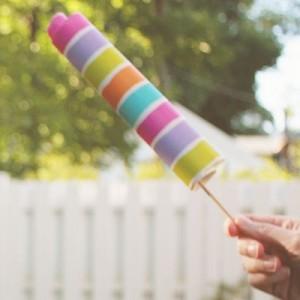 This is one of the easiest crafts to make in order to help your students celebrate Chinese New Year; however, it might be wise to wait until the end of the day to make them, as they are, simply put, sticks that are flung around to achieve the desired "yo yo" effect. Another option would be to have students label their Chinese Yo Yos with their names once finished, then set them aside until the last bell rings, handing them out as kids leave for the day.
That said, this is a really fun and super-easy project that requires very few materials. Here's what you need:
- Dowels (or similar sticks) cut into lengths of about 6" (or as desired), one per student
- Thin paper - think wrapping paper, cut into long strips that are half as wide as the length of each dowel (for example, if the length of the dowel is 6", the strip of paper should be 3" wide), while the strip of paper should be a few feet long
- Glue or tape
Hand out materials to each student with instructions to glue or tape one end of the paper strip to one end of the dowel, then roll the paper tightly around the dowel. If using glue, set it aside to allow the glue to dry. To use the Chinese YoYo, hold the dowel and flick your wrist in an upward motion, which causes the paper to yo-yo out and back in.
Chinese Lanterns
 Chinese lanterns are simple to make to celebrate Chinese New Year in your classroom. Gather the following materials for this project:
- Construction paper (8 and 1/2" x 11" for smaller lanterns)
- Glue or tape
- Stapler
- Ruler
- Pencil
- embellishments, like markers, paints, stamps, ink, sequins, and feathers
Start out with a piece of construction paper per student, and instruct them to cut one inch from the short end of the paper (if you have younger children, you might have a volunteer prep this step ahead of time) - this piece will serve as the lantern's handle.
Give students time to decorate their lanterns, then model the following instructions for your class:
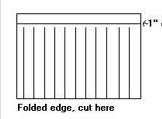 Fold the piece of construction paper in half lengthwise, then place on the desk in front of you with the folded edge down
- Measure an inch from the top of the paper, then draw a line across the length of the paper - this will show everyone where to stop cutting
- Measure lines one inch apart from the folded edge up to the line at the top
- Cut along the lines
- Unfold the paper and bring the long edges together so that the cylindrical lantern shape is made. Secure the edges with tape or glue.
- Secure the edges of the handle along the top of the lantern with tape or staples
Lucky Red Envelopes
[caption id="attachment_8353" align="alignright" width="300" caption="Chinese Symbol for Luck"]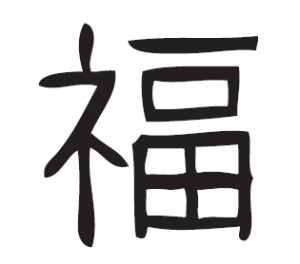 [/caption]
Red envelopes are a common gift for Chinese New Year, containing money for the recipient and decorated with symbols of luck. For these Red Envelopes, you'll need:
- red construction paper cut into pieces measuring about 6" by 8"
- glue or tape
- gold paint or markers
- green paper if desired
To make the envelope, fold one of the shorter sides towards the middle, then fold the other shorter side over the top and secure with tape or glue. Choose one of the open sides of the rectangle and fold up the end, securing with tape or glue.
Display the Chinese symbol for luck (pictured on the right), and have students decorate the outside of the red envelope with the symbol using gold markers or paint.
If desired, have students make fake money using green construction paper to place inside of their envelopes.
Martin Luther King, Jr's Day is on Monday, 1/16/12, which is coming up fast. Here are fun and educational last-minute ideas and activities to use with the kids in your classroom to celebrate this great man in history.
What Do Your Kids Know About Martin Luther King, Jr?
This is a valuable question, and one worth exploring before launching into a lesson and activity to celebrate Dr. Martin Luther King, Jr. Start exploring what your students know using a KWL chart. Incorporate vocabulary using this Predict, Define, and Sketch chart before and after reading and discussing important information with your kids. A preliminary list of relevant vocabulary words could include:
- character
- marches
- slaves
- prejudice
- protest
- freedom
- fair
Martin Luther King, Jr Read Aloud Ideas
Combining read alouds with independent reading time and material help your children review and practice important skills while studying Martin Luther King, Jr. These opportunities for exploration through reading also lead into valuable discussion concerning Martin Luther King, Jr. and his impact on history and society, including why we observe a day in his honor.
There are many reading resources from which to choose regarding Martin Luther King, Jr. - these are some of my favorites:
Biography of Martin Luther King, Rookie Biographies (a great resource for first and second graders on up!)
My Dream of Martin Luther King by Faith Ringgold
Martin Luther King by Rosemary L. Bray
A Picture Book of Martin Luther King, Jr by David A. Adler
Martin’s Big Words: The Life of Dr. Martin Luther King, Jr. by Doreen Rappaport
If You Lived at the Time of Martin Luther King by Ellen Levine
As you read, it might be a good idea to incorporate this Fact-Question-Response Chart to help your students process important information.
Martin Luther King, Jr. Quote Activities
We would be remiss in studying Martin Luther King, Jr. with our kids and not mentioning the "I Have a Dream" speech, along with the great amount of inspirational quotes during this and additional speeches he gave. The following activities can help you explore King's words in-depth together.
Martin Luther King, Jr. Writing Activities
Writing poetry with your students provides a powerful way for kids to process information and meaning. One poem form includes incorporating Dr. King's "I Have a Dream" speech. Create a template of a cloud on a sheet of white paper and make copies, one per student in your class. Include the words, “I have a dream…” along the top if needed.
Discuss Dr. King's speech with your students, including what Dr. King might say about our current society – what do your kids think needs to be changed? Have students complete their clouds with their ideas. If you want, you can have students decorate their clouds along the outside with cotton balls (this would be fun for younger kids). Display these inspirational ideas in a simple but timely bulletin board.
Another option for a fun poetry activity is the Cootie Catcher format incorporating students' original poetry about Dr. Martin Luther King, Jr. - this writing lesson plan can be found here!
 Beginning at sunset on Tuesday, December 20, 2011, and ending at sunset on Wednesday, December 28, 2011, Hanukkah provides an excellent opportunity for children to practice diversity and use valuable skills constructed already this school year.
Head over to Top 5 Hanukkah Activities for suggestions to build Hanukkah lesson plans for your classroom that inlcude activities in reading, writing, listening, cooking and a short educational video about this time of year!
With the invention of the Wii and Xbox, many children spend their time indoors playing computer games. Why not encourage your children to get outside with my guide to children's games from around the world.
Agawang Sulok
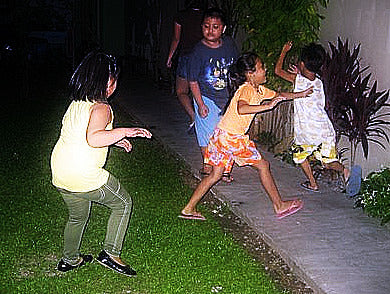
Agawang Sulok Image Source
Agawang Sulok is a traditional Filipino children's game and literally translated means catch and own a corner. One child is 'it' and four other children each have a corner. The aim of the game is for the children to switch corners without the child who is 'it' getting their first. If they do, then the child without a corner is then 'it'.
Stalking the Drum
Stalking the Drum Image Source
Stalking the drum is a traditional Native American game to increase spatial awareness. All participants are blindfolded except one who beats a drum. This starts off as a loud, deep bang and fades to a soft, quiet bang. The blindfolded children must follow the noise and find where it is coming from.
Sardines
Sardines Image Source
Sardines is a great game and doesn't necessarily need to play outside. A variant of hide and seek, one person goes to hide and one person is the finder. The remaining players have to find the person hiding and then join them before the finder finds them. Rather funny when you get more than a couple of people trying to squeeze into a small space.
Kappa Gantulu
Kappa Gantulu Image Credit
Kappa Gantulu is the Indian version of stone skimming. You need a lake, pond or flat body of water and some flat-bottomed stones. Throw the stones onto the water and watch it bounce over the surface. The player with the most bounces is the winner. Research has shown that an angle of about 20 degrees between the stone and the water is best.
British Bulldog
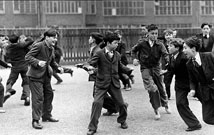
British Bulldog Image Credit
British Bulldog, also known as Red Rover or Cocky Laura, is survival of the fittest. One or two players stand in the middle of the playing area and are the "bulldogs". The remaining players then have to run from one side to the other without being caught. Those who are caught become bulldogs and the winner is the last player standing.
Chinese Jump Rope
Chinese Jump Rope Image Source
Chinese jump rope is a Chinese game similar to the western game of hopscotch. Two children stand facing each other with a circle of rope or elastic about 5 to 6 feet in length, pulled taught around their ankles. The other players then have to do a series of moves without stopping or hesitating. As the game progresses the rope gets higher therefore increasing the difficulty.
Ro, Cham, Beau
Ro, Cham, Beau Image Source
Versions of the game Rock, Paper, Scissors or Ro, Cham, Beau date back to the Chinese Han Dynasty. The game requires two players and is normally played in a best of three matches. While saying rock, paper, scissors, the two players bounce their fists up and down and then make the sign for rock, paper or scissors with their hands. Rock beats scissors, scissors beat paper and paper beats rock. This game is often used to settle disagreements.
Declan Ruki
Declan Ruki Image Source
Declan Ruki is similar to Simon Says. One player becomes Simon and tells the other players what to do, such Simon says put your hands on your head. The trick is you should only do something if it preceded by Simon says. If you do what they say and they have not said this, then you are out. This is a popular children's party game and the winner is only remaining player.
This fun and playful editorial was created on behalf of Hotelclub.com; where you can find family friendly hotels in Macau.
Martin Luther King, Jr. was gifted with words. Most of all, he spoke the truth and was able to lead a peaceful uprising, successfully bringing light to the truth of his words. This Martin Luther King, Jr. Word Search is unique in that it includes ten quotes from Martin Luther King, Jr. Each word in bold can be found in the word search. Each student chooses a favorite quote and explains how he/she can demonstrate the quote.
Martin Luther King, Jr.'s quotes are included as part of the word search in hopes that the students will truly listen to and model his words. The quotes can be used to generate classroom discussion and lead into additional lesson plans.
Materials:
Instructions:
Teacher
- If you were able to make a transparency of the word search and quotes, place it on the overhead projector. (optional)
- Read a quote and help the students find the first word.
- Give an example of a favorite quote and possible answer.
Students
- Complete the Martin Luther King, Jr. word search in groups or independently.
- Circle your favorite quote.
- Like Martin Luther King, Jr., how can you demonstrate the meaning of this quote?
More Martin Luther King, Jr. Lesson Plans:
Recommended Reading:
Here's a free Martin Luther King, Jr. list of quotes and coloring page to help direct your lesson plan. You can then display the students' finished work on a classroom bulletin board.
Materials:
Instructions:
Students
- Explain that Martin Luther King, Jr. (January 15, 1929-April 4, 1968) was a pastor gifted with the ability to demonstrate peacefulness with his actions and words in the midst of violence and discrimination. He was able to lead a peaceful uprising, continuing to light the way along the treacherous path towards African American freedom in the United States. Although it was said that all people in the United States were free, African American citizens were still being treated poorly. Police brutality and racial discrimiation were serious problems. Martin Luther King, Jr. won the Nobel Peace Prize in 1963. He gave many speeches encouraging love, peace, tolerance and nonviolence. He was assassinated on April 4, 1968.
- Color the the Martin Luther King, Jr. coloring page.
- Write a quote on the lined paper. (Letting the students choose a favorite quote will encourage the students to read all the quotes.)
- Glue or tape the coloring page and quote onto the construction paper as a frame.
Teacher
Display the finished artwork and writing on a classroom bulletin board.
"What are teachers doing to help prevent bullying?"
You'll find the framework here for a journal writing activity to help document exactly how you have helped prevent bullying in your classroom. You can differentiate this journal activity, depending on your students' needs and the law in your state.
We know that when our students feel safe, understood and well-cared for they are able to learn most effectively. We also know that our students bring what they learn at home into the classroom. If home is not a healthy place, we need to teach appropriate behavior, which is a delicate, crucial and necessary task... for the sake of peace and humanity.
Know the Anti-Bullying Law in Your State
As well as developing anti-bullying curriculum, it's important to know the anti-bullying law in your state. Many states already have anti-bullying laws. This anti-bullying legislation is typically mandated without funding. Searching for "anti-bullying laws by state" in your search browser, you can find the law in your state. Administration at your school may have printed material explaining exactly how bullying is addressed.
Journal Entries & Teacher Talk Designed to Prevent Bullying
Directions:
1. The "Students' Journal Entry" can be written on the board or overhead, and students can journal about the topics each day. When you read the journals later in the day, you can then design your next lesson. Keeping the journals confidential, unless there is a threat of harm to the child or someone else is important.
2. The "Teacher Talk" is intended to generate ideas for the teacher to sort through while developing the lessons, and not to be read word-for-word aloud to the students. Feel free to take from "teacher talk" (below) what you wish and repeat it, if you find it appropriate.
1. Look in the Mirror
Students' Journal Entry - What do I see in the mirror? Why have I put down other people? How can I better deal with stress?
Teacher Talk
Teachers, we must be honest with ourselves and teach our students to do the same. Do we find ourselves being overly critical and hard on our students (or even children at home)? After all, that’s what bullies do. We must ask ourselves why we do this. Journal about it and make a commitment to get help. Getting counseling, being positive and caring can help stop a cycle of pain that won’t be forgotten in our lifetime. (Just being honest here. Most teachers arn't bullies, but most of us have meet a fellow teacher who is.) Taking better care of ourselves needs to become a priority (eating right, exercise and clearing our minds of stress). If we are not at a school that allows us to do this, for the sake of our own health, it's better to leave. After all, teachers have also been the victim of bullying. If you're in a place where this is happening and you aren't getting the help you need, move on.
2. Consistent Classroom Rules Keep Students Safe
Students' Journal Entry - How would I feel if all our classroom rules were broken today? Why? How do I feel when everyone follows the classroom rules? Why?
Teacher Talk
On the very first day of school establish and enforce your classroom rules. Stick by the classroom rules , so students feel safe. When students help create classroom rules they feel a sense of ownership. How do the classroom rules prevent bullying behaviors?
3. Pay Attention
Students' Journal Entry - What does bullying look like (body language and words)? When did I feel left out? What did I do about it? Who helped me?
Teacher Talk
Pay attention to subtle body language . Do you notice a group purposely leaving a student out of a circle? Do you notice whispering and glares? Do you feel the negative energy being thrown around? Pay attention to the clues and teach your students to recognize these clues. Share what the clues are with your students.
Bullying Clues:
- gossiping
- dirty looks
- "accidentally" hurting someone
- hurting someone on purpose
- leaving someone out of a circle
- ignoring a person when they speak
The list can go on and on. Listen to your gut instincts and pay attention to body language and conversations. Children may make strange sounds and body gestures to tease other children. This is not acceptable behavior and will not be tolerated. The students need to know this and have it clearly spoken to them.
4. Speak in Defense, Use Action and Model Caring
Students' Journal Entry - How can you defend yourself or someone else when you see bullying? Write about a time when you helped someone who was being bullied, or when you were helped. Do you know anyone who needs help?
Teacher Talk
When you notice girls gossiping and purposely leaving a student out of a circle, don't ignore it. Say something about it. It is then crucial to take action steps, and don't stop until you see a change in body language and words. If we acknowledge, but not demand and expect a change , we are actually accepting it. This causes more damage.
Depending upon previous occurrences and the situation, we need to gauge what we say to make it appropriate for the offense. It may be appropriate to say, “We are leaders with good hearts in this classroom, and I know you have a good heart. Truly popular people are kind to everyone, even if they have differences. How can we be kind to each other right now?”
The actions step would be for the students to open the circle and be kind to the girl. If there is still negative body language (rolling eyes, noses in the air), pull the culprit aside and having a direct conversation about why they think that this rude behavior is acceptable. In many instances, I've seen teachers quickly address it and then go on teaching the lesson. The students may open the circle and then glare at the girl or ignore her. Don't allow it. As soon as you see another offense (and they'll try to do it behind you back), address it immediately. After we call the student on the bullying behavior, we show the students how to include the other student, and we include the student who did the bullying. As the teacher walks over to the circle at least one girl may be inclined to open up a space for the student. Include the student with a smile and the others will follow suite. You can do this during sports, discussions, games or other classroom activities. If there is constant bullying going on a student may need to meet with the school counselor for an individual meeting. Maybe they need to vent about circumstances at home and they are using bullying as a way to vent off steam. Talk with the school counselor about it and the counselor can help the child develop skills to better manage stress, rather than bullying.
6. Speak Up and Smile When You See Kindness
Students' Journal Entry - How can I be kind to people today?
Teacher Talk
When you see students who model kindness smile at them, showing you see their kind behavior, and if appropriate speak up. Teach them all how to be leaders with a heart of gold. Looking our students in the eyes, saying their names with a smile and helping them feel valued and cared for makes them feel safe and understood. It will then be easier for them to focus on their studies.
7. Explain Self-Esteem
Students' Journal Entry - What is self-esteem? How do I feel about myself?
Teacher Talk
Explain that bullies really feel bad about themselves and that’s why they pick on others. Even a “popular” bully may not have healthy self-esteem, so they become a bully. As a visual, point your index finger and show that three fingers are pointed back to ourselves when we criticize and put down others.
8. Honesty
How are you honest with yourself about bullying? What can you do to take care of yourself, rather than letting off steam by bullying someone?
Teacher Talk
Ask students to be honest with themselves. Why do they feel that they need to put other people down, exclude peers or be cruel? Are they letting off steam? Trying to de-stress because they are upset that their parents were arguing, or they feel self conscious themselves. Talk about this openly. Talk about healthy ways to de-stress, without hurting other people. This can be different for everyone. Some enjoy art, jogging, hiking, music, writing or cycling.
9. The Truly Popular
Students' Journal Entry - What is true popularity? What is superficial popularity? How do you see yourself?
Teacher Talk
Explain what “true” popularity is and what“superficial” popularity is. Truly popular people are kind to everyone and people like the person because he has good character and a kind heart. Superficial popularity is all about only hanging around certain groups of friends, wearing certain types of clothes and being involved in the latest and greatest activities. Explain that you are all going to be real to each other, and you are going to call it on someone if they are showing superficial behaviors, such as leading a group of people to gossip, exclude or hurt someone else.
10. Respect and Helping Each Other Feel Safe
Students' Journal Entry - What is respect? Why is it important for me to respect myself and others? Where do we first learn about respect from? Who would you tell if you did not feel respected or safe? Why?
Teacher Talk
Explain that we often treat ourselves the way our parents treat us. Therefore, we tend to treat our peers the way we were treated. Ask the students if they can think of a person they do not fear, but truly respect because they trust and value the person's character and actions. Listen and share answers. Discuss examples of "fake" respect. If your parent hit you, would you respect him/her? No. Not really, you just wouldn’t want to get hit. You might act respectful, but inside you would know that an injustice had occurred because you were hit and hitting is wrong. You might even be angry with them for hitting you and want to hit other people. If you had a teacher who told you not to bully other students, but actually picked on students herself, would you respect her? No, of course not. That is "fake" respect. You act nice to the person, but you don't trust them. At school and in life, we don’t hit people with words or actions. We treat people the way we want to be treated. You are safe at school and if I see or hear that you are not safe, I will do all I can to protect you. But it is your responsibility to tell me if you or a friend need help and I don’t see. I am here to help you feel safe and have fun learning.
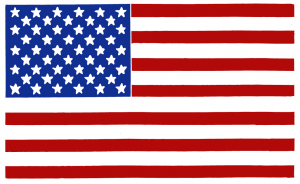 Symbolism on the Flag of the United States of America
The flag of the United States of America has thirteen equal, horizontal red and white stripes. The upper left corner of the flag has a blue rectangle in the canton, which is referred to as the "union". Inside the blue rectangle there are fifty white stars. The fifty stars on the flag represent the fifty states. The thirteen stripes represent the original thirteen colonies. These colonies rebelled against the British monarchy and became the first states in the Union.
Other Names for the Flag:
Materials:
Lesson Plan:
Teacher Preparation
- Hang up a flag of the United States of America in your classroom, if you haven't already.
- Make copies of the Flag of the United States of America handout.
- Print and post a copy of the poster of the National Anthem, The Star-Spangled Banner.
- Post a large map of the United States of America in your classroom or make a copy of the map onto an overhead transparency.
- Write the names of the first thirteen colonies next to the map: Delaware, Georgia, Maryland, Massachusetts, New Hampshire, New Jersey, New York, North Carolina, Pennsylvania, Rhode Island, South Carolina and Virginia. (Cover up the answers. You can ask your students to name the colonies, if they know.)
Instruction
- Sing the National Anthem, The Star Spangled Banner, with your students. (Check-out a CD with the song at the library to sing along with.)
- Discuss the song together.
- Hand out the Flag of the United States of America coloring page.
- Explain the symbolism of the flag ( in the first paragraph above).
- Ask the students to name all 13 colonies. If they don't know the colonies, tell them.
- Students color in their own flags of the United States of America. Show your students exactly what to color red, white and blue. Point to the flag you have in your classroom as you explain.
- Collect the United States of America flag coloring page. Explain to the students that it is important to respect our flag. It should never be left on the ground or treated with disrespect. Keep the completed work for your students' Classroom Memory Books.
- Explain that this summer they will celebrate Independence Day on the 4th of July.
Copyright 2010 Teaching Resource Center
Are you looking for more facts about George Washington?
Here's a free, printable George Washington book.
Instructions for the Free George Washington Book:
- Teachers make one copy of the book for each student.
- Students use scissors to cut the pages on the dotted lines.
- Students staple the pages together to make the books.
- Students read and color the books.
More Information About George Washington:
Books for Your Classroom Library:
Here's a puppet theatre craft , free puppet templates & puppet show ideas.
This puppet theatre is beautiful and it's easy to make.
Ideal for All Ages
Your students will love to create puppet shows. It's a great center or literacy work station activity. (See page 67 of Literacy Work Stations for Debbie's re-telling puppet show idea). The children can also make "Kathy the Cat" puppets to practice short vowel sounds.
Puppet Theatre
Materials:
- Large box (wardrobe boxes are perfect, but any box will work).
- Paint (any colors)
- Paintbrushes
- Scissors or knife (only for the adult)
- Fabric (for the drapes)
- White fabric or pillow case (for the backdrop)
- White paper (to color a scene and tape it onto the pillow case backdrop)
- Smocks for painting (Younger children may like to get the paint all over the place. A 2-year old painted this theatre, so we painted it in the driveway and she wore her rain jacket and rainboots, which were easy to clean.)
Instructions:
- Adult cuts a hole for the stage.
- Children paint the theatre. The children can finger paint or use the brushes.
- Let the theatre dry.
- Adult glues on fabric for the curtains.
- If you have a wardrobe box, take out the center metal bar. Cut open the pillow case and insert the drapes onto the bar. You could also just drape fabric over the bar. If it's not a wardrobe box, tape or glue the fabric to the back of the box.
- Children draw scenes from the puppet show onto the white paper and tape it to the back of the box on the white fabric backdrop.
Puppets:
Holiday Puppet Show Ideas:

 [/caption]