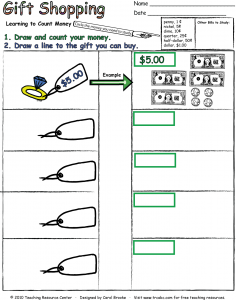
This printable has been designed to use after assessing your students' prior knowledge. It is meant to be differentiated, depending upon the student's needs.
Materials:
Instructions:
1. After completing pre-assessments, the student circles the money he/she needs to study.
2. Student draws the amount of money on the right side. Then, the student writes the amount inside the green box.
(E.g., Drawing a simple circle with "25" inside the circle, can symbolize a quarter. Drawing a rectangle with a dollar sign and "1' can symbolize a dollar.)
3. Student draws the gift on the left side. Then, the student writes the purchase price of the gift on the tag.
3. Students draw a line from total amount of counted money to the gift they can buy with that amount. (Needs to be the exact amount.)
Notes:
- On the upper-right of the printable, you will see "other bills to study". This can be used for larger bills (e.g. $5, $10, $100, etc.)
- Here's a Gift Shopping, Learning to Count Quarters and Dollars printable.
- Students can use pretend money as they count. (optional).
More to Help Students Learn about Money:
Here's a free reproducible for you!
[caption id="attachment_2008" align="aligncenter" width="460" caption="Download this free printable for use in your classroom!"]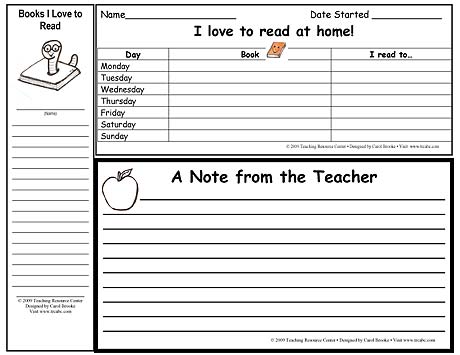 [/caption]
I Love to Read at Home
Feel free to use this as a weekly reading log for your students. You could ask the students to fill out the dates on the reading logs after Monday morning journal time. I've noticed that if I don't have students fill out the dates in the classroom, the logs may show up without dates on them. It's important to encourage the students to fill out the logs themselves, rather than having parents completing the logs. Having a special box near the door to return reading logs can be helpful.
Books I Love to Read
This bookmark can be kept in the students' silent reading books. After the bookmark is completed, you could ask the student to talk about his/her favorite book with you or the class during morning circle time.
The student will present the following:
-
Title
-
Author
- Theme
-
Plot
-
Settings
-
Character
-
Favorite part of the book (a few lines read aloud).
-
Why is this a favorite book?
-
What book do you want to read next and why?
You could even have the students fill out this book report before they do their book report aloud. This Reading Boxes Craft can give you more ideas for silent reading. It's important to set up a very structured silent reading time so that assessments can be done. Students can read in groups by reading level or at their own desks.
A Note From the Teacher
It's always best if the first note home is a positive one. I"m sure you know of many positive reasons, but here's a quick list to keep in mind.
-
Jumped up a reading level.
-
Finished a book during
Writers' Workshop. Ask parents to look at the book and read it with the child at home.
-
Earned high marks on a test.
-
Learned a new skill.
-
Improved in a subject area.
-
Good character (witnessed the student being caring, honest or thoughtful, etc.).
-
Tell parents to prepare for student of the week (send a photo and fill out a form to share).
-
Remind or thank a parent about his/her scheduled volunteer time.
Your Ideas about Free Reproducibles
Would you like us to offer another type of free reproducible? Please let us know in the comments below.
In today’s fast-paced, elementary school classroom environment, teachers need every advantage possible to help kids get a head start with their reading skills, and in writing, math and other subjects.
Pocket charts provide one the most tested and proven classroom tools available. A pocket chart provides teachers with a storage system that uses plastic pockets for organizing lesson plans and classroom activities.
My students love doing activities with the pocket charts. We use them to do word matching, singing exercises, and for reading poems and stories. We keep our monthly calendar in one, our weekly story in another, letters of the alphabet in another, and so on.
Typically made from vinyl, metal eyelets at the top of the pocket charts make them easy to hang on the wall and plastic pockets sewn on the front to organize contents. Pocket charts are available in a variety of sizes, colors, and styles for lots of different purposes. Other popular styles include desktop and easels.
Charts with large pockets are useful for organizing kid’s school work. Ones with smaller pockets are useful for creating monthly and weekly calendars and curriculum for various centers in the classroom.
Pocket charts are quite affordable, typically priced from $10 to $100 USD, depending on size and features included. Many will be either rectangular or square, although you can also find pocket charts in very fun shapes for specific themes, making a great interactive tool in the classroom. They can easily be combined with flashcards to teach specific subjects like alphabet letters, numbers, animals, etc.
Uses for pocket charts in the classroom are almost infinite. By placing pieces of paper, cardstock or pre made cards in the pockets, teachers can create lessons plan for math, reading skills, writing and many other student activities.
One of my favorites is the Portable Desktop Pocket Chart. It's two-sided, has a pouch to store my cards, and a sturdy handle so that I can fold it up and move from classroom to classroom.
While great in classrooms, they can also be used in the home. Parents can use them to help keep their kids’ homework well organized. Use a pocket chart stand to place them on a table or desk at the right level so your kids can easily reach them or hang them on the wall at eye level. Pocket charts are also useful as organizational tools in the office.
I use them extensively in my classroom, and like to put out 5 to 10 of the larger type at any one time, changing them throughout the school year to keep the room fresh and fun! Some are on the walls, while others hang from easels with rollers, so they can easily be rolled out for various learning centers, and stored out of the way when not in use.
My class room has several large pocket charts devoted to literacy activities, and smaller ones the kids can use at their desks or on the floor. Our overhead projector fanny pack is a great way to protect and organize overhead transparencies, with clear plastic pockets on 3 sides, and an open side for the fan to circulate air.
I use the pocket charts every day, sometimes with the entire class, but also for teaching smaller groups specific lesson topics. They provide do-it-yourself, step by step instructions in our classroom centers as well.
Something new we’re trying this school year is desktop pocket charts, which have one-inch tall sentence strips, and a two-sided cardboard pocket chart stand for display. The Desktop Center Package includes a center chart, the desktop stand, two storage pouches, and a desktop caddy and I saved 10% on each package, which is only $28.25. I was able to get my parents to donate money so that we were able to get 3 of these great packages. We use them for seasonal activities and various centers like learning the letters of the alphabet.
A great and inexpensive classroom tool, you can see that pocket charts offer endless ways to make learning fun and interactive without spending a fortune. If you haven’t already used them to improve your kids’ reading skills and for endless other learning activities, then I hope you will find these tips helpful to think of new and creative ways to use them!
Choose from our wide selection of pocket charts at everyday discount prices!

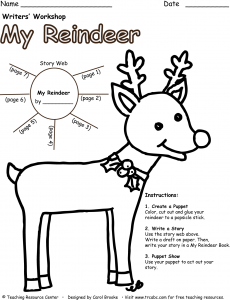 uppets, story web and mini-book.
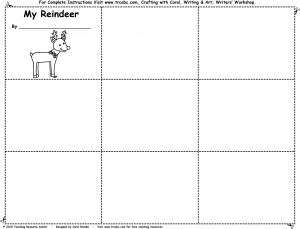 Write a draft of the story.