 As your kids start to reach the ages of three and four, their minds are being constantly stimulated by everything around them. They've developed some coordination and motor skills that they are starting to experiment with more. You should encourage activities that sell themselves.
Encourage Them To Draw You Pictures
By now, you've probably figured out some of the things that your kids really enjoy. They usually have their phases. Ask them to draw you a picture of whatever they are currently obsessed about. Is it a TV show? Is it a certain sport or toy? After they draw it, no matter how bad it is, place it proudly on your fridge or somewhere they can see it. If they're good with arts and crafts, buy them a kit that they can spend some time working on. Encouragement and reward is good here.
Sit Down And Put A Puzzle Together
There are puzzles of practically anything you want. You can also find services online that will make a puzzle out of any picture you desire as well. Find something they really enjoy and make puzzle out of it. It's also best if you can find some time to sit down with them and work on it together. Puzzles really help with shape recognition, problem solving, and coordination.
When I was a kid, I was the master of Lego's. That's what people told me, at least. Kid's love building things where they can put their imagination to work. Lego's can be a great substitute for puzzles.
Let Them Use Your iPhone
It's amazing how kids are quickly catching on to technology these days. As parents, we should embrace this. There are plenty of apps that work directly with increasing your child's coordination and recognition of certain objects (colors, animals, etc.). Try to keep them away from apps that do not serve any real purpose.
Get Them Some Ride On Toys
If it's a toy that makes them feel older, they are going to love it. Wagons are a great option. If you can get them pushing, pulling, and riding in a wagon, it not only helps their coordination, it helps their motor skills as well. There's also a toy out there currently called the PlasmaCar that is completely operated by them alone (no motor, no batteries). There's a whole world of coordination training going on with that toy.
Play Horseshoes or Beanbags
Horseshoes is an inexpensive game that is easy to take advantage of. Teaching them how to calculate distance in their minds while using their hands is powerful. You can also do a beanbag toss as well onto certain targets. One good example is a game called "Cornhole" that involves tossing beanbags into a hole in a box.
Obstacle Course
Create some space in your house and use anything safe that you can find! You can use blankets, boxes, pillows, big plush toys, and so much more that can make your child's imagination run wild. You can also switch it up slightly every time they run the course just to keep them guessing. I also like to use blue painter's tape to as a guide as to where he should be going. It's fun for me and him.
About the Author: Cristina Butler is heavy contributer to parenting topics and ideas. She also writes reviews for products that helps a child's coordination like the PlaSmart PlasmaCar and the Step2 Wagon For Two. Follow her on Twitter (@WatchKidsGrow) for great parenting tips and ideas!
 Children make excellent fundraising partners. Major organizations, like the Girl Scouts and Boy Scouts, know that it's difficult to turn away an earnest child trying to earn money for a cause that's important to him or her. That said, not all fundraising ideas are suited for younger volunteers. The following are 10 excellent fundraising ideas for kids:
- Door-to-door sales. As mentioned, big organizations know the power of a cute child turning up at your doorstep asking for your help in supporting his or her cause. Select a product that's different than what other organizations are selling and ensure that kids only go door-to-door with an adult, for the first of our fundraising ideas for kids.
- Lollipop Bouquets. This is a great at-school fundraiser for older kids in junior high or high school. Their fellow classmates pre-purchase a bouquet of lollipops wrapped in tissue paper to look like flowers. Then, on a specified day, the bouquets are delivered to the recipients.
- Car Wash. Assign washing, rinsing and drying duties to the kids, to maximize productivity. Have a couple of the youngsters stand along the street with signs, advertising the car wash and for whom the money is being raised.
- Lemonade Stand. Whether your younger fundraisers want to do this on a small scale in their neighborhood or on a larger scale at a local craft fair or similar event, a lemonade stand teaches children the basic concepts of running a business, while raising money for a charity.
- Can Drive. Number five on our list of fundraising ideas for kids not only helps out your charity, but the environment as well. Kids can collect cans at home, from local businesses (especially at restaurants that serve soda by the can) and from their family members and neighbors.
- Penny Drive. Have children collect their spare pennies over the course of several weeks or months, and donate them to your charitable cause. They can even put spare change collection jars out at local businesses in order to increase donations.
- Ice Cream Social. Who doesn't love ice cream? Have the kids not only sell tickets to the event, but also have them help customers with their ice cream toppings and with cleaning up after the event.
- Kids' Garage Sale. Have children go through their toys, games and outgrown clothes and hold a child-centric garage sale. They can clean out their closets while helping out a good cause in the process!
- Talent Show. Children can show off their talents while raising money for charity. Have them sell tickets to the show to their family, friends and neighbors.
- Babysitting. Perfect for tweens and teens, hosting a fundraising babysitting event gives parents a chance to enjoy a night out while their children enjoy fun activities and games with other children.
Randall Davidson is the head author of Fundraiser-Ideas.net, a leading resource about easy fundraising ideas. Fundraiser-Ideas.net offers a variety of helpful fundraising guides, including a long list of creative fundraising ideas.
If you have a child who is autistic, or if you’re in charge of autistic children, you’ll need all the help you can get to create an autism-friendly environment for these kids. Kids with autism have special needs and require special handling. Here are 12 ways how you can create the perfect environment for autistic children in your home or school.
1. Autistic Children Are More Sensitive To External Stimuli
Autistic children have more sensitive senses than non-autistic ones. They will respond negatively to loud noises and bright light. Sensory overload may not always trigger a meltdown in your autistic charges, but it can certainly set the stage for one. To avoid sensory overload, keep the lights soft, avoid noisy implements, speak softly, and don’t have more than a few children in a room. Allow the children to wear ear plugs if needed.
2. Don’t Ever Nag An Autistic Child
It takes a little longer for the autistic child to process information, move from one task to another, change routines and so on. Be patient. Make your request and walk away, allowing the child to comply in their own time. Don’t repeat instructions, and don’t argue or debate with a child, as you will risk overloading the child’s senses.
3. Reinforce Negative Punishment With Positive Punishment
Some autistic children can be very unruly and it is important to set limits for their behavior which will help them develop properly. Mete out negative punishments if needed, but also let them know that they’re good kids and that you’re proud of them.
4. Don’t Be Critical Of The Child’s Work
Correcting an autistic child’s behavior can be very crushing to the child, as he or she perceives it as rejection. Be careful; if you find that a child is doing something wrongly, do it the right way when he or she is watching, without directly correcting them. Don’t be hasty, critical or judgmental with an autistic child.
5. Never Force The Autistic Child To ‘Fit In’
Value the autistic child’s unique strengths and accommodate their weaknesses, but don’t force them to fit in to the accepted tenets of normal life. Would you force a person in a wheelchair to climb stairs? Autistic children have certain limitations and you must be respectful of those.
6. There’s No One-Size-Fits-All Approach
Each autistic child is different, so you’ll have to adapt your environment to suit your particular child or children. The best way to do this will be to pay close attention to your particular child and notice signs of stress. Remove everything that triggers stress; it could be a red colored ball, or it could be the lights, or it could be sound, it could be anything specific to your child. Pay attention.
7. Set Up Autistic-Friendly Zones In Your House
Set up different zones in your home for different activities, such as the eating zone. Each zone, especially the eating zone, must be free of distraction, clutter and unnecessary noise. Autistic children cannot take in too many things at a time so if the meal table has anything on it other than a plate, a spoon and a fork, they can refuse to eat or throw a tantrum.
8. Set Up A Quiet Time-Out Zone
A small nook in a corner of your home that’s quiet, cozy and private should be assigned as your autistic child’s ‘quiet zone’. Here is where the child can recharge his or her batteries and recover from tantrums. You can keep a few pillows or toys here, depending on your child’s color tolerance, but avoid anything loud.
9. Provide A Visual Activity Schedule
It’s difficult for autistic children to connect events as you describe them verbally. Use pictures instead; a picture of your car with the two of you, and then one of the cleaners, the grocers and the bank will explain the day’s schedule. Do the same for play schedule – first the bubbles, then the ball game and then the frisbee, and then a picture of mealtime, to indicate playtime is over.
10. Use Pictures As Reminders
If you want your autistic child to remember to bring back all the contents of their backpacks, be sure to put a laminated picture-list of backpack objects in their pocket, instead of a written list.
11. Use Baskets To Help You Coordinate
If you want your child to pack his backpack, or play a game alone, put all the relevant things into a basket. Don’t let the things be lying around, mixing with the background.
12. Use Timeout Cards
Verbalizing needs is a very difficult area for autistics. To help them with this, laminate picture cards indicating various activities. Each time the child wants to do something like take a bio break, he can pick up the card and show you, instead of trying to verbalize his need.
About the Author:
Alex Higgins is freelance writer for Self Hypnosis resource center where you can instantly download relaxation cds, subliminal messages programs, nlp courses and lot more.
[caption id="attachment_2732" align="alignleft" width="240" caption="Photo By Wade"]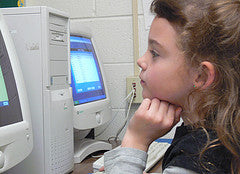 [/caption]
If there’s one single fact that has stayed constant throughout time it is that children will always want to do what they are not allowed to do. This has never been more true than it is today, but it has also never been more dangerous.
Parents institute computer rules to keep their children safe from Internet predators and inappropriate material. They encourage them to focus on learning rather than chatting on Facebook with their friends. As children have grown up with computers, they can often be one step ahead of you when it comes to using technology and computers. Making sure they follow your rules can be difficult with all the tricks they use.
Here are a few so you can stay a step ahead and better protect your kids.
Deleting Browsing History
So, your child has been on the computer for hours, and when you ask them what they are doing, they innocently reply “working on my science project about a miniature load cell.” When they go to bed, you quickly check the search history and see nothing but Google searches and pages on “load cell calibration.”
This doesn’t mean that you have nothing to worry about – your child could easily have been on dozens of different websites and simply deleted the sites from the history. Look at the time-stamps of the visited websites – were they all opened at the start of the browsing session and there is nothing from the final two hours? Your child was probably breaking the rules.
You can find free software online that will help you recover deleted browsing history and see what your child has been up to.
Multiple Online Accounts
You may require your child to tell you the passwords to their email, Facebook and Twitter accounts so that you can make sure they are not saying anything inappropriate about themselves online. This does not mean that your worries are over.
Your child may well have multiple accounts for social media and email and give you the passwords to the one that is filled with innocuous, everyday material. Their private conversations with friends will be kept on other accounts that you have no idea even exist.
If you are concerned about this as a possibility, you could install a keylogger on the computer. This will let you see exactly what your child has been typing.
Disabling Parental Supervision Software
You may have installed a program like NetNanny to limit the kinds of sites that your child can visit. Unfortunately, a simple Google search brings up multiple sites that tell your child exactly how to disable or uninstall this software. Reinstalling your software every so often can set it back to your original settings, but the best way to make sure your child is not visiting such websites is to only allow them to use the computer when they are in a room with the rest of the family.
This is a guest post by James Tennant who blogs how to keep your kids safe while online, even if you think they are researching loadcell and miniature load cell developments.
Today’s kids are exposed to a high-level of questionable content on TV, on magazine covers in the grocery store check out,
[caption id="attachment_6639" align="alignright" width="160" caption="Photo by woodleywonderworks"]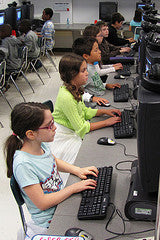 [/caption]
and, perhaps more obviously, on the Internet. It is important for parents to keep an eye on who your little one is talking to and what pages they’re stumbling across. And just because your computer search history shows something harmless like “miniature load cell,” don’t be afraid to dig a little deeper to find out what they’re really looking at.
Several companies offer products that can track what your kids are doing online, even if they are clearing browsing histories. How much you choose to limit where they’re allowed to surf, what they’re allowed to see, who they’re allowed to talk to, or whether or not they know about the software, is up to the individual parent.
Talk To Your Kids About Internet Safety
Before you hire a private eye to keep tabs on your son or daughter, you could just try talking to them about the dangers of the World Wide Web. Keeping an open line of dialogue with your child will come in handy in the future years where topics of concern get more dangerous than the possibility of them Googling something beyond load cell calibration.
You can broach the topic by saying that you saw something on the news or that one of your coworker’s children found themselves in a dangerous situation when online. You can gauge your own plan of action based on your child’s response. Did they say that that other child was silly to go on certain sites or talk to strangers? Did they try to defend the child’s privacy? There’s no use kicking your Internet safety settings into high gear if all your child really is doing is checking out their favorite TV shows, playing games and connecting with their school friends. Get to know your child’s habits before overreacting.
The Problem of Online Bullying
Another area that needs to be addressed with kids and the Internet is the rise in online bullying. It is a shame that children use the Internet as another outlet to tease, poke fun at and alienate their peers. Social networking sites like Facebook have turned the usual high school rumor mill into a full-fledged attack on teens.
Make sure your child knows the importance of recognizing and reporting bullying. Ask them about the kids that everyone picks on and encourage them to think about how they would feel if they were in that situation before jumping on the bandwagon. And remind your child to tell a parent, teacher, or school counselor if they are ever involved in a bullying situation before it gets out of control.
This is a guest post by Michelle Anderson who blogs on everything from loadcell technology, including the miniature load cell to getting the best deals online.

