For 2012, Chinese New Year is celebrated on Monday, January 23rd. The significance of this holiday and simple activities to help your kids learn about Chinese New Year can be found here, but fun, educational, and simple craft ideas are included below.
Chinese Yo Yo
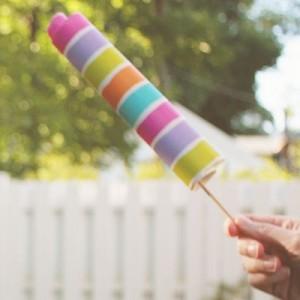 This is one of the easiest crafts to make in order to help your students celebrate Chinese New Year; however, it might be wise to wait until the end of the day to make them, as they are, simply put, sticks that are flung around to achieve the desired "yo yo" effect. Another option would be to have students label their Chinese Yo Yos with their names once finished, then set them aside until the last bell rings, handing them out as kids leave for the day.
That said, this is a really fun and super-easy project that requires very few materials. Here's what you need:
- Dowels (or similar sticks) cut into lengths of about 6" (or as desired), one per student
- Thin paper - think wrapping paper, cut into long strips that are half as wide as the length of each dowel (for example, if the length of the dowel is 6", the strip of paper should be 3" wide), while the strip of paper should be a few feet long
- Glue or tape
Hand out materials to each student with instructions to glue or tape one end of the paper strip to one end of the dowel, then roll the paper tightly around the dowel. If using glue, set it aside to allow the glue to dry. To use the Chinese YoYo, hold the dowel and flick your wrist in an upward motion, which causes the paper to yo-yo out and back in.
Chinese Lanterns
 Chinese lanterns are simple to make to celebrate Chinese New Year in your classroom. Gather the following materials for this project:
- Construction paper (8 and 1/2" x 11" for smaller lanterns)
- Glue or tape
- Stapler
- Ruler
- Pencil
- embellishments, like markers, paints, stamps, ink, sequins, and feathers
Start out with a piece of construction paper per student, and instruct them to cut one inch from the short end of the paper (if you have younger children, you might have a volunteer prep this step ahead of time) - this piece will serve as the lantern's handle.
Give students time to decorate their lanterns, then model the following instructions for your class:
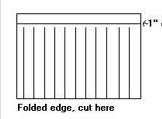 Fold the piece of construction paper in half lengthwise, then place on the desk in front of you with the folded edge down
- Measure an inch from the top of the paper, then draw a line across the length of the paper - this will show everyone where to stop cutting
- Measure lines one inch apart from the folded edge up to the line at the top
- Cut along the lines
- Unfold the paper and bring the long edges together so that the cylindrical lantern shape is made. Secure the edges with tape or glue.
- Secure the edges of the handle along the top of the lantern with tape or staples
Lucky Red Envelopes
[caption id="attachment_8353" align="alignright" width="300" caption="Chinese Symbol for Luck"]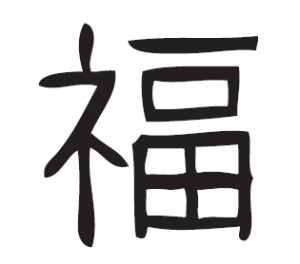 [/caption]
Red envelopes are a common gift for Chinese New Year, containing money for the recipient and decorated with symbols of luck. For these Red Envelopes, you'll need:
- red construction paper cut into pieces measuring about 6" by 8"
- glue or tape
- gold paint or markers
- green paper if desired
To make the envelope, fold one of the shorter sides towards the middle, then fold the other shorter side over the top and secure with tape or glue. Choose one of the open sides of the rectangle and fold up the end, securing with tape or glue.
Display the Chinese symbol for luck (pictured on the right), and have students decorate the outside of the red envelope with the symbol using gold markers or paint.
If desired, have students make fake money using green construction paper to place inside of their envelopes.
 Chinese New Year is a great excuse to practice important skills while celebrating an important part of Chinese culture.
When is Chinese New Year?
Chinese New Year is based on the Chinese Lunar Calendar, which is 2,640 years older than our calendar, and can begin on any date between Janaury 21st and February 18th each year. The date of Chinese New Year is determined by the date of the New Moon in Aquarius.
For 2012, Chinese New Year occurs on Monday, January 23rd and is the year of the Dragon.
Which Animal are You?
Each year is named for a specific animal, and that the animal ruling the particular year of your birth will effect your life and personality. According to Chinese folklore, each person has the personality characteristics of the animal ruling the year they were born.
Tiger
1914, 1926, 1938, 1950, 1962, 1974, 1986, 1998, 2010
Personality characteristics of those born under the year of the Tiger include bravery, loyalty, intelligence, stubborn and competent. Tigers can tend to get in a lot of trouble, but they make great friends.
Rabbit
1915, 1927, 1939, 1951, 1963, 1975, 1987, 1999, 2011
Personality characteristics of those born under the year of the Rabbit include luck, independence, happiness, intelligence, and a desire to know how things work.
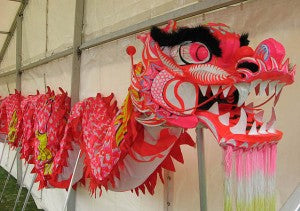 Dragon
1916, 1928, 1940, 1952, 1964, 1976, 1988, 2000, 2012
Personality characteristics of those born under the year of the Dragon include honesty, stubborness, loyalty and plenty of energy.
Snake
1917, 1929, 1941, 1953, 1965, 1977, 1989, 2001, 2013
Personality characteristics of those born under the year of the Snake include focus and wisdom, with a trust in their own judgement. Snake people like to help others and strive to do their best.
Horse
1918, 1930, 1942, 1954, 1966, 1978, 1990, 2002, 2014
Personality characteristics of those born under the year of the Horse include shyness, quick-wittedness, cheerfulness and popularity. For some reason, horse people have a great deal of trouble believing they are loved, when in fact, horse people are easy to like and love.
Ram (Black or Gray Sheep)
1919, 1931, 1943, 1955, 1967, 1979, 1991, 2003, 2015
Personality characteristics of those born under the year of the Sheep include wisdom, gentleness, elegance and compassion. They can be bossy because they like to see things done correctly.
Monkey
1920, 1932, 1944, 1956, 1968, 1980, 1992, 2004, 2016
Personality characteristics of those born under the year of the Monkey include a tendency to chatter, but they are also funny, nosey, clever, witty, and successful.
Rooster
1921, 1933, 1945, 1957, 1969, 1981, 1993, 2005, 2017
Personality characteristics of those born under the year of the Rooster include a tendency to rise early, be alert, think deeply and speak well. They like to stay close to home.
Dog
1922, 1934, 1946, 1958, 1970, 1982, 1994, 2006, 2018
Those born under the year of the Dog tend to be loyal friends, quick to learn, eager to please, and always try to do their best. They prefer to be with people they know and like.
Pig
1923, 1935, 1947, 1959, 1971, 1983, 1995, 2007, 2019
Personality characteristics of those born under the year of the Pig include a tendency to be late and forgetful, but they are also intelligent, sincere, brave, popular, and treat all people with great kindness.
Rat
1924, 1936, 1948, 1960, 1972, 1984, 1996, 2008, 2020
Personality characteristics of those born under the year of the Rat include cheerfulness and kindness. Rat people love to gossip, which can cost them many friendships if they are not careful.
Ox
1913, 1925, 1937, 1949, 1961, 1973, 1985, 1997, 2009, 2021
Personality characteristics of those born under the year of the Ox include a tendency to be easy going and self-assured, which helps help them to be successful. Ox people have thoughtful responses. Ox people love deeply and share their strength with those they love.
Printable Chinese Zodiac Charts
Begin exploring Chinese New Year with these printable Chinese Zodiac charts. Print out the animals that apply to the kids in your classroom based on the years they were born, or have them explore the entire zodiac chart by photocopying a booklet for each child.
Chinese New Year Recommended Reading
The following list of books can help you and your students explore Chinese New Year together. Before reading together and independently, fill out a K-W-L chart with your class, to be completed once you have more information.
To add more depth to your reading, fill out a process grid on chart paper about Chinese New Year that includes information about food, music, stories, decorations, gifts and traditions. Then use this information to compare and contrast Chinese New Year with our traditional New Year celebrations in America.
- My China Travel Journal by Laura Barta
- Celebrating Chinese New Year by Diane Hoyt-Goldsmith
- Chinese New Year for Kids by Cindy Roberts
- Dim Sum for Everyone by Grace Lin
- Fortune Cookie Fortunes by Grace Lin
- Grandfather Tang's Story by Ann Tompert
- Happy, Happy Chinese New Year by Demi Hitz
- Lanterns and Firecrackers - A Chinese New Year Story (Festival Time) by Jonny Zucker
- Lion Dancer by Kate Waters
- Moonbeams, Dumplings, and Dragon Boats by Nina Simonds, Leslie Swartz, and The Children's Museum, Boston
- Sam and the Lucky Money by Karen Chinn
- The Dancing Dragon by Marcia K. Vaughan
- The Five Chinese Brothers by Claire Huchet Bishop
- This Next New Year by Janet S. Wong
- Tikki Tikki Tembo by Arlene Mosel
These reading and zodiac activities are really simple ways to begin celebrating Chinese New Year in the classroom. These easy activities require a little planning, but offer an infusion of colorful culture and fun while allowing your students time to review and practice a variety of reading skills.
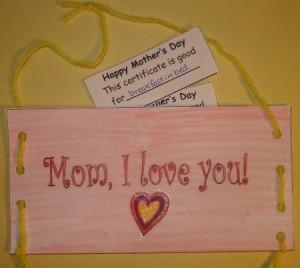 For mums with young children, nothing could mean more than a gift on Mother’s Day made by the fair hands of their little ones. Dads may well lend a hand ordering some chocolates or flowers, but teaming up with the kids to make something or come up with a personalised present can help make the occasion even more special. Here are five great ideas for families to work on together to treat mum this Mothers Day 2012, no matter what age your children.
Make Your Own Cards
Letting you kids loose to get crafty with colored cardstock, glue and glitter can turn Mother’s Day cards into a thing of unique beauty, no matter how much of a mess they make. Handmade cards are something for proud mums to treasure for years to come. Even if your children are too young to get to grips with the craft scissors or dad is struggling for time to stock up on the glue and glitter, you can still come up with personalised cards by ordering one online and adding your own photographs and personal messages.
Homemade Chocolates
Sticky fingers can make some tasty treats and kids will love getting busy in the kitchen to prepare some secret sweets and chocolates for mum. They don’t have to make artisan chocolates from fresh cocoa, but making your own treats can be as simple as melting some cooking chocolate into a bowl and adding some Rice Krispies to create crispy cakes. The children can be as creative as they want decorating them as well. It’s probably best dad orders a box of posh chocs as well, just in case...
Photo Montage
It’s too easy these days with digital cameras, mobile phones and Facebook to take photographs and then never get them printed off. But photo prints are the perfect way to create lasting memories to treasure and celebrate those happy family times. The children can pick out their favourites pictures and then help out putting the print-outs into frames, or arranging them into their own special collage for a gift that is bound to take pride of place in the family home.
Treat Hamper
Letting your children loose in the aisles of the supermarket may sound like a dangerous game, but with your help they can stock up on all of mum’s favorites; chocolates, cakes, jams, snacks, wine, whatever she wants! Put it altogether into a simple hamper and add some decorative flourishes and mum has the perfect tasty present from her children to celebrate Mother’s Day in 2012.
This article has been produced by Mothers Day 2012 UK, an amazing site dedicated to Mothers Day in 2012.
 Beginning at sunset on Tuesday, December 20, 2011, and ending at sunset on Wednesday, December 28, 2011, Hanukkah provides an excellent opportunity for children to practice diversity and use valuable skills constructed already this school year.
Head over to Top 5 Hanukkah Activities for suggestions to build Hanukkah lesson plans for your classroom that inlcude activities in reading, writing, listening, cooking and a short educational video about this time of year!
With the festive season approaching, why don’t consider some new and fun things to do with your kids in order to keep the Christmas excitement strong and have a memorable Christmas experience!
Create a Good Deeds Christmas Calendar
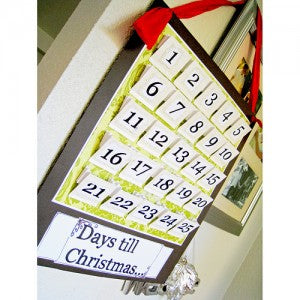 With kids in the classroom or at home, create a "Good Deeds Calendar" that follows the pattern of the advent calendar to count down the days until the Christmas holiday. For each day, have children decide different good deeds that they could participate in, with a bit of chocolate or dried fruit and nuts to celebrate the good behavior.
This Good Deeds Calendar can help focus their behavior during the exciting Christmas season and encourage the spirit and practice of giving to others. An important rule of thumb is to be consistent when it comes to using the calendar. When the calendar is finished and Christmas has arrived, you can share their good deeds with family members, and perhaps have Santa Claus write a little note for your children to go with their gifts at home to thank them for participating in the spirit of giving.
Plan for Christmas Shopping for Parents and Kids
It is nice to involve children with planning Christmas shopping in order to encourage the spirit of giving. In the classroom, this can involve making wild "wish lists" of presents that kids would buy family and friends, then figuring out the cost of each using store ads to compare prices and find the best way to save money. Once this is done, it's important to address the practical realities of gift-giving as a child. Since kids actually have little or no money, it's important to give them a few choices of Christmas gifts to make in the classroom or at home for the people on their lists.
During a shopping trip, parents can have their children help purchase items on a list, including certain ornaments, lights, fake snow and other Christmas-related items. This fun activity teaches children about budgeting, making and following lists, finding the best prices and quality of items, and using money to purchase products. It's also fun, regardless of the age of the children involved. For younger children, include notes with pictures of the items you need and have them look for it in the store. This will also prevent your children from wanting other stuff as they are pre occupied with the things they need to get that is on their list.
Decorations for Home and Garden Sheds
It's easy for kids to create Christmas decorations to give as gifts, but decorating for the garden can also be fun during this  time of year. Have children in the classroom make stepping stones that feature reindeer tracks or festive holiday messages. For the kids at home, string multi-colored lights and create Santa’s grotto out of an ordinary garden shed, where you can also have Santa Claus drop the Christmas gifts. To make it even more special, have Santa’s foot prints in the snow, and leave a little note from Santa Claus on the garden door! This is a great way to spend quality time with your kids as most parents often stay inside when the kids are out to play in the snow. Decorating the garden shed is a lovely family experience, whereby you can be outside with your children for the Christmas excitement!
Here are a few great ideas that you can do with your primary school classes during the buzz and anticipation that inevitably happens during the build up of breaking up from school for Christmas.
Each Christmas decoration below also includes a list of the suggested items you will need to make them.
Festive Fruit-Inspired Decorations
Oranges are traditional for many during the Christmas season, in appearance as well as practice. By drying out orange 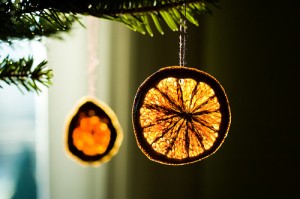 slices in the oven, you can make a variety of individual Christmas decorations perfect for the Christmas season.
Slices on their own can be fixed to create door wreaths, hung from doors in a pendant-like fashion, or used to decorate Christmas trees when combined with simple loops made from string or pipe cleaners.
You can even create orange skin spirals using a vegetable peeler, making sure not to cut the piece away from the rest of the orange prematurely - 4 to 5 rotations usually look best. These can then be hung as decorations in their own right using string tried to one end (carefully punch a hole using scissors) or combined in numbers to create decorative hanging mobiles.
You will need 1-2 oranges per a student, craft glue, ribbon or coloured string and scissors. For slicing the orange or cutting spirals it will be necessary to use a sharp knife or instrument and we highly recommend an adult or teacher do this on their behalf.
Glitter Cones
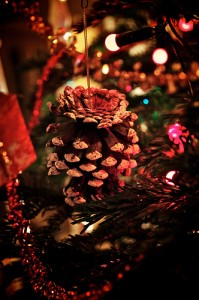 Our natural surroundings are full of great beauty once you know where to look!Endless sources of inspiration will be revealed to you and your kids for creating fun, crafty, Christmas decorations in your classroom this Christmas.
Pine Forests are abundant in many locations and ideal places to collect pine cones for use in creative projects such as this simple Christmas craft. The cones respond to both heat and moisture. Store them in a warm, dry place to cause the cones to arc open into their familiar shape. Your kids can paint them green to turn them into Christmas trees or white for snowmen. Coat them in glue and sprinkle with glitter to make mystical eggs, but first soak them in water to cause them to close again.
If you don’t live near any forests, you can look at what’s available from your local park or even the school yard. Twigs blown from trees, acorns, or even holy sprigs if you’re lucky!
You will need: Pine cones (enough for 1 each), craft glue, paint brushes, paint and beads as desired.
Crafty Snowflakes
During the Christmas season, snowflakes are never really far away! A number of craft stores and general hardware stores will sell pipe cleaners pre-coated in a layer of shimmery tinsel, or your students can create a similar effect yourself with simple glitter and glue. For a more modest snowflake, normal pipe cleaners can be covered in white tissue paper.
Take 1 of the pipe cleaners, and then overlap 2 more pipe cleaners bending them around the center of the axis in order to fix together a star shape with 6 spokes. Take an additional 2 pipe cleaners and cut them down to size into 2 inch strips. Bend these small strips in the middle to form triangle shapes. These can then be glued at intervals along each of the 6 spokes to create a variety of flake like patterns, each one as individual as the students in your classroom!
You will need: pipe cleaners (5-6 per student), scissors, glitter & glue (optional), string and soft craft tissue paper (optional)
Christmas Jar Lanterns
Painted jars make great candle lanterns with some fun and simple customizations. Before starting the craft, ask your  students to start collecting clear glass jars and ask them to bring them in to store in your classroom.
You will need to pre-purchase a selection of brightly colored ceramic paints or tinted glass varnishes to use for this craft - take a look around your classroom to take inventory of paint that you already have.
Let your students loose when it comes to painting a particular pattern or using a variety of color, though you might like to suggest Christmas themes. Once your students have painted and created a unique design they are happy with, the jars can be fired off in a regular oven to set the paint.
Once this is done and the jars have been allowed to cool, you can create a cradle and handle so that these Christmas lanterns can be carried round. This will vary depending on the size of the jar, so you may wish to help them with this step. Cut enough wire to create a ring that snugly fits the circumference of the top part of the jar, where the lid grooves are and tie this off, cutting off any excess wire. Taking a second section of wire, bend in the middle sufficiently enough to create a simple handle and fix each end to the ring at opposite ends of the jar by wrapping the wire round.
You will need: 1 or 2 glass jars (per student), ceramic paint, paint brushes and soft coated craft wire.
This article was written on behalf of Christmas Trees and Lights who sell a selection of artificial Christmas trees and Christmas fairy lights.
The holidays are much more fun through the eyes of babes. It is no wonder, however, that it often becomes a whirlwind of 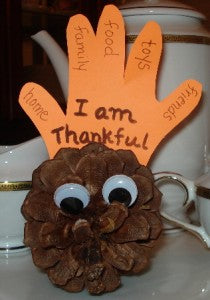 chaotic energy. Thanksgiving can be particularly challenging as it often revolves around food and not toys. That is why it is best to have at least 5 fun Thanksgiving activities for kids to occupy them. Below are a few ideas so you can enjoy the holiday too.
Perform a Thanksgiving Play
Kids all the way up to pre-teen age love to put together a performance. Gather them in a circle and ask them if they would perform a Thanksgiving show to entertain your guests at home or organize to perform for other classrooms in your building. Offer them old clothes, hats, shoes, props, pencils, crayons and paper and plenty of time to practice.
Find the Turkeys
This activity requires index cards and a box of crayons. Give each child 3 index cards and tell them to draw completely different turkeys on each one. After they are done, collect the pictures (make sure each one has their name on it) and hide the pictures throughout the house or classroom. Combine this activity with sight words or math facts for extra practice, then release the kids to search for the cards - whoever collects the most, wins.
Blindfolded Catch 'Em
You will need: a box of large paper clips, cardboard, string, a broom handle, bucket, scissors and a magnet. Cut out Thanksgiving themed shapes (turkey, pumpkin, leaves, Pilgrim hat) and put a 1, 2 or 3 on the back. Punch a hole in each one and attach a paper clip. Put them all in a bucket. Tie the string the broom handle and the other end to the magnet. Blindfold each child and one by one have them fish for a shape. The one with the most points (the numbers on the back) wins.
Blindfolded Turkey Points
On a large poster board outline a giant turkey. Draw sections inside it and place a number from 1-10 in each section. Cut out a small paper turkey. Tape the poster to a wall. Put tape on the paper turkey, blindfold a kid, turn them around three times and guide them to tape the paper turkey on the poster. Record the number they placed it on. After 3 tries each, the one with the most points, wins.
Guess your Guest
Give each child a paper and a pencil. Give each child several names of different guests or classmates. Tell them to approach each guest and ask them what their favorite thing about Thanksgiving is. The guests should be prepped to be short, yet specific in their description. Gather the guests together and have each child read each explanation without revealing who said it. The guests all write down who they think said it on a piece of paper with their name on it (the person who said it writes 'me'). Put the papers in a pile. Reveal who said it. Whoever wrote that name gets a point. The most points win.
Getting the kids to have fun without a computer or video game is priceless. Take pictures the whole time; they will go a long way.
About the Author: Matt Tomasino loves to cook and knows how difficult it can be to keep kids busy during the holidays. When he's not cooking (and blogging about it), he can be found writing phlebotomy career guides and informational material for school programs.
What do you have planned for March?
Bookmark Classroom Crafting with Carol for lesson plans, printables and crafts. Check back often for up-dates.
Fun Activities for Saint Patrick's Day:
- Saint Patrick's Day Leprechaun Traps - Your students will love making leprechaun traps while they learn about the scientific concepts of push, pull and lever. Leprechauns will visit your classroom looking for gold coins. When your students return to the classroom after lunch they will find sparkling, green footprints and notes from a leprechaun! Visit the link for a letter from the leprechaun, directions on how to make the footprints and Saint Patrick's Day art.
- Saint Patrick's Day Cootie Catcher - Your students will enjoy studying Saint Patrick's Day words as they design and play their own cootie catcher game.
- My Leprechaun Trap Puppet, Mini-Book & Writer's Workshop Lesson Plan -Your students will love creating their own leprechaun puppets and stories. Here’s a free lesson plan, printable puppets, story web and mini-book. This writer’s workshop activity can compliment a Leprechaun Trap science lesson.
- Celebrating Saint Patrick's Day in the Classroom - Vocabulary, spelling, math, reading, writing and game activities to share with your students.
- Fun Classroom Projects for Saint Patrick's Day - Shamrock Classroom Painting Project, Shamrock Hearts Drawing Project, Polymer Clay Lucky Charm Craft Project.
- Saint Patrick's Day Guessing Game - Printable Guessing Game (PDF) with answers.
More Saint Patrick's Day Facts:
Classroom Facts about Saint Patrick's Day
Recommended Teaching Products:
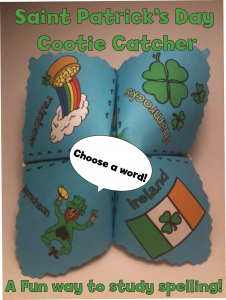 Your students will love to make this Saint Patrick's Day Cootie Catcher while learning Saint Patrick's Day words!
Materials:
- Saint Patrick's Day Cootie Catcher template (color or black & white)
- Crayons
- Pencil
- Scissors
- List of Saint Patrick's Day words you would like the students to study
Instructions:
Teacher
- Make print one copy of the Saint Patrick's Day Cootie Catcher for yourself. How you choose to print makes a difference. Print Instructions: Go to "print", "properties", "page scaling", "shrink to fit printable area". Printers may vary, so you may want to try another setting if it does not work properly.
- Create an example Saint Patrick's Day Cootie Catcher before making several copies. Cutting excess paper straight across the sides can help the green and blue lines match up if they need to be adjusted.
[caption id="attachment_7667" align="alignright" width="237" caption="How you choose to print makes a difference! Print Instructions: Go to "print", "properties", "page scaling", "shink to fit printable area". (Printers may vary, so you may want to try another setting if it does not work properly.)"][/caption]
- During instruction, open your example and explain how you color, cut, fold and write to make the Saint Patrick's Day Cootie Catcher.
- Write Saint Patrick's Day words on the white board. These words can be included inside the green and yellow boxes. As students play the game they will be required to spell the words on the outside flaps (leprechaun, rainbow, shamrocks and Ireland.) Depending upon assessments, each child may need a different list of words to study for the boxes inside the cootie catcher. They can design their own messages and pictures inside using the words they need to study.
[caption id="attachment_7674" align="alignright" width="257" caption="How you choose to print makes a difference! Print Instructions: Go to "print", "properties", "page scaling", "shink to fit printable area". (Printers may vary, so you may want to try another setting if it does not work properly.)"]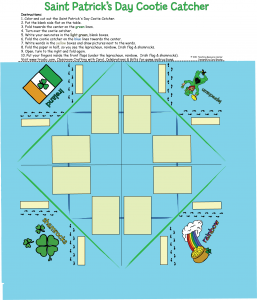 [/caption]
Students
- Color the Saint Patrick's Day Cootie Catcher.
- Cut out the Saint Patrick's Day Cootie Catcher. (Use decorative scissors to get the effect show in the photograph here.)
- Follow the instructions on the printable explaining how to fold and write the notes inside.
Helpful Tips for Printing and Folding
It is not recommended to print color for an entire class. Students can use the black and white version with the green and blue lines, so they can color the cootie catcher themselves. The color copy is meant for the teacher, so it can used as an example. After you print the color version, you will need to cut off the white excess around the edges. Use the lines as a flexible guide, but do what feels best and looks right. As you fold on the blue lines/leprechaun prints it seems to work best if you fold in between both sets of foot prints. The footprints are easier to see than the blue lines inside anyway.
How to Play the Valentine’s Day Cootie Catcher Game:
- Ask the person to pick a word on the outside flaps (leprechaun, rainbow, shamrocks and Ireland).
- Spell the word as you open the cootie catcher.
- Ask the person to choose a picture/words inside.
- Spell the words.
- Ask the person to choose a picture/words inside the cootie catcher again.
- Now, open the flap and read the Saint Patrick's Day message inside.
Recommended Book:
Holiday Readers Variety Pack (Includes Saint Patrick's Day)
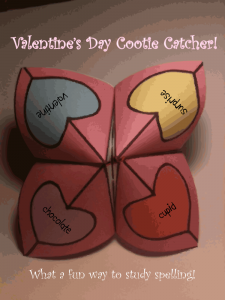 Your students will love to make this Valentine's Day Cootie Catcher while learning Valentine's Day words!
Materials:
Instructions:
Teacher
- Make one copy of the Valentine's Day Cootie Catcher for each student.
- Make one example Valentine's Day Cootie Catcher.
- Open your example and explain how you color, cut, fold and write to make the Valentine's Day Cootie Catcher.
- Write Valentine's Day words on the white board. These words can be included inside the pink boxes, if you like. If you have special Valentines Day words you are studying, ask that they include these words as they write the notes in the pink boxes. If you'd like the students to have practice spelling particular Valentine's Day word over and over again, ask that they writ
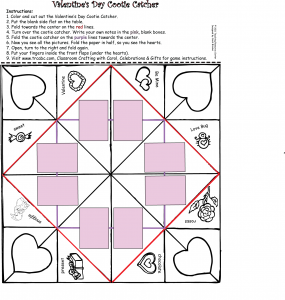 e the words in the outside hearts. As they play the game they will be required to spell these words. (Example: heart, valentine, cupid, surprise, chocolate.) Depending upon assessments, each child may need a different list of words to study.
Students
- Color the Valentine's Day Cootie Catcher.
- Cut out the Valentine's Day Cootie Catcher.
- Follow the instructions on the printable explaining how to fold and write the notes inside.
How to Play the Valentine's Day Cootie Catcher Game:
- Ask the person to pick a word inside a heart.
- Spell the word as you open the cootie catcher.
- Ask the person to choose a picture/words inside.
- Spell the words.
- Ask the person to choose a picture/words inside the cootie catcher again.
- Now, open the flap and read the Valentine's Day message inside.
Recommended Book:
Holiday Readers Variety Pack (Includes Valentine's Day)

 [/caption]